
Hi, I'm
Léon Àmi Wagner
AI Engineer — NLP & LLM Systems
I build LLM systems end to end — from fine-tuning on HPC clusters to agents in production, previously on AIT's AI Task Force, before that two years at Fraunhofer IPK. Since August I've been translating that into C#/.NET at ApoVerlag — software running in 600 Austrian pharmacies: from the cluster to production, just a different stack. This site is my proof of work.
Blog
write-ups on the things I build and study
Trajectory
today first — scroll to trace the road here
Österreichische Apotheker-Verlagsgesellschaft (ApoVerlag), Vienna, Austria
- Full-stack development with C#/.NET, ASP.NET and cloud infrastructure
- Brings an AI-native engineering workflow (Claude Code, structured code review, test-driven practices) to a team that treats it as part of its quality culture
Humboldt University of Berlin, Germany
- Thesis: 'A Modular Patch-and-Route Framework for Continual Learning in LLMs' — submitted June 2026, defense July 2026
- Coursework: NLP, Deep Learning for Visual Computing, Process Mining, Efficient ML for NLP, Business Process Automation (UiPath, Celonis, Power Automate)
Projected final grade: 1.5 (~4.0 US GPA)
AIT Austrian Institute of Technology (AI Task Force), Vienna, Austria
- Built the rubric-based LLM-as-judge evaluation framework (4,017 validated QA pairs) and evaluated on 2,000 real-world queries: 95.2% rated Good or better and 96–100% citation accuracy on the top knowledge bases — consistent across German and English
- Hybrid retrieval stack — dense + learned-sparse bge-m3 search fused via RRF, HyDE, multi-query expansion, cross-encoder reranking — plus automatic source routing, document mode and cross-reference following
- Shipped as an OpenAI-compatible FastAPI service in three environments — Docker Swarm production, HPC/SLURM with vLLM on NVIDIA MIG slices, ARM64 GH200 server — fully on-premise, air-gap capable
- Shipped a PDF→Markdown preprocessing pipeline (MinerU, local Vision-LLM image descriptions, RAG-optimized cleaning), parallelized across NVIDIA MIG slices for ~8× throughput — deployed as a microservice used by colleagues across the team
- Automated the chatbot's knowledge updates: an intranet scraper detects new and changed documents via a checksum manifest, runs them through the pipeline and refreshes the vector databases — no manual re-ingestion
- Built a 5-agent pipeline that generates bilingual fine-tuning datasets from policy documents (fact-checked with DeepSeek R1) — and LoRA-fine-tuned a 14B reasoning model on them, merged and GGUF-quantized for llama.cpp
- Delivered hands-on trainings on RAG, fine-tuning and data preprocessing to hundreds of AIT colleagues and advised other departments on implementing their own chatbots
- These systems form the deployment environment for my master's thesis research on continual learning in enterprise LLMs
Universitat Politècnica de Catalunya in Barcelona, Spain
- Coursework: Advanced NLP, Multi-Agent System Design, Machine Learning, Human-Computer Interaction
Fraunhofer IPK, Berlin, Germany
- Identified a system bottleneck and cut backend runtime by 60–70% with a caching layer
- Implemented a RAG chatbot (ChatGPT/Gemini) over the Battery Pass documentation for natural-language document queries
- Led the BatteryPass proof-of-concept and assessment-tool projects; built REST APIs (Express), React UIs, and MongoDB schemas
HTW Berlin, Germany
- Focus on software engineering and embedded systems; bachelor thesis at Fraunhofer IPK
GPA: 1.5 (equivalent to ~4.0 GPA in the US system)
Fraunhofer IPK, Berlin, Germany
- Track-and-trace environment with MongoDB and a Fiware-Orion context broker; CO₂-footprint calculation and QR-code access — thebatterypass.eu
- Thesis graded very good; demonstrated end-to-end on a simulated battery value chain
HTW Berlin, Germany
- First professional development role: programmed with Java, HTML, CSS and JavaScript
- Owned test design, execution and documentation from the student perspective; advised on UI components for the new web portal
- Maintained the project homepage (Typo3) and project wiki (Confluence)
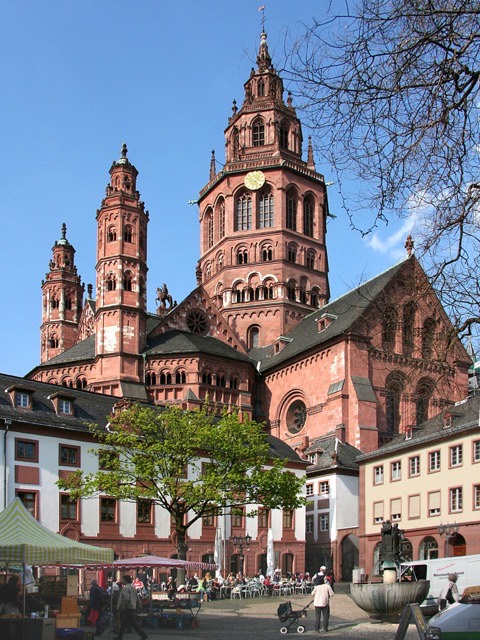
Born & raised in Mainz
Mainz, Germany
Greenpeace volunteer · Economics (2 semesters)
Skills
what I build with — each group backed by work you can check on this page
NLP & LLM Systems
My core focus: building and adapting LLM systems end to end — from fine-tuning to retrieval to agents.
proven in: master thesis “Patch-and-Route”SLM reasoning studyAI Task Force @ AIT
Machine Learning & Computer Vision
The classic ML craft underneath — from CNNs to embeddings, trained and evaluated properly.
proven in: Kaggle CNN competitionboth live demos on this site
Software Engineering & Full-Stack
Real software around the models — from API to UI, built in a team.
proven in: bachelor thesis @ PI Informatikrobotics projects @ HTWthis site (Next.js + in-browser ML)
Research & ML Infrastructure
Making research run: GPU clusters, experiment tracking, automated pipelines.
proven in: LLM training on AIT's HPC clusterautomation research @ Fraunhofer IPK
AI-Native Workflow
AI coding agents are my standard practice, not an experiment — Claude Code as daily driver; Codex, Cursor and GitHub Copilot where they fit. Specifying, reviewing and shipping agent output is muscle memory.
proven in: this entire site — designed and built in pair with Claude Code
Languages
Licenses & Certifications
- Spanish A2 Certificate
Universitat de Barcelona - Issued Jun 2025
- Web Developer Bootcamp 2024
Udemy - Issued Aug 2024
- UNIcert English B2 Certificate
HTW Berlin - Issued May 2022
- Startup Summer University Certificates
HTW Berlin & European Social Fund - Issued September 2021
Awards and Honors
- Scientific contribution - Robot vacuum cleaner & Model Factory
October 2022
Recognized with certificates for exceptional performance on both projects at HTW Berlin, awarded as the best contributions of the year.
Projects
the full build record, newest first — run the live demos right here
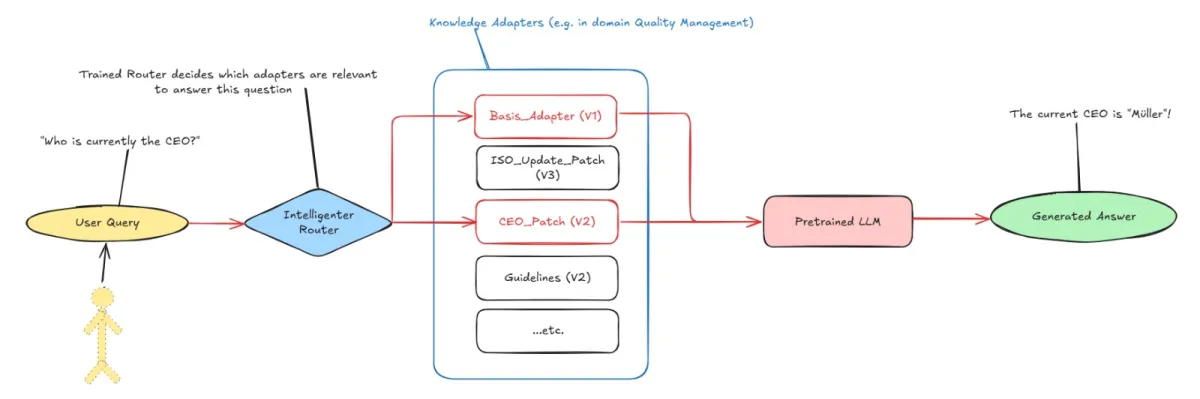
Master Thesis: A Modular 'Patch-and-Route' Framework for Continual Learning in Enterprise LLMs
Continual learning for enterprise LLMs — 86.4% edit success at 0% forgetting, Pareto-dominant among all evaluated baselines
Humboldt University of Berlin, Germany · Oct 2025 - Jun 2026 · submitted, defense 30 Jul 2026
This thesis tackles a fundamental problem in deploying LLMs in enterprise settings: how to integrate evolving, domain-specific knowledge without catastrophic forgetting. Standard fine-tuning methods overwrite general knowledge with new information, while existing parameter-efficient approaches like LoRA still cause interference between old and new facts. The proposed 'Patch-and-Route' framework draws on cognitive science — treating knowledge updates not as destructive overwrites, but as discrete Knowledge Patches combined with a dynamic routing mechanism that inhibits outdated knowledge paths rather than erasing them, mirroring how humans re-route rather than delete disproven associations. The architecture consists of three components: a frozen base LLM, an Expert Pool of LoRA adapters (large Base Adapters for domain corpora and small Knowledge Patches for specific updates), and a two-level routing system with manual domain selection and an Intelligent Dispatcher. Two routing strategies are evaluated: Time-Aware Centroid Routing (embedding-based, with RAG-based source replay for conflict resolution) and a Parallel-Orchestrator Architecture (ensemble inference with an LLM synthesis agent for ambiguous queries). The framework is benchmarked against monolithic LoRA, LoRA+RAG, X-LoRA, and RECIPE on SituatedQA, CounterFact, and a proprietary enterprise QM corpus, measuring conflict resolution accuracy, catastrophic forgetting rate, and computational efficiency. Submitted 18 June 2026; defense on 30 July 2026.
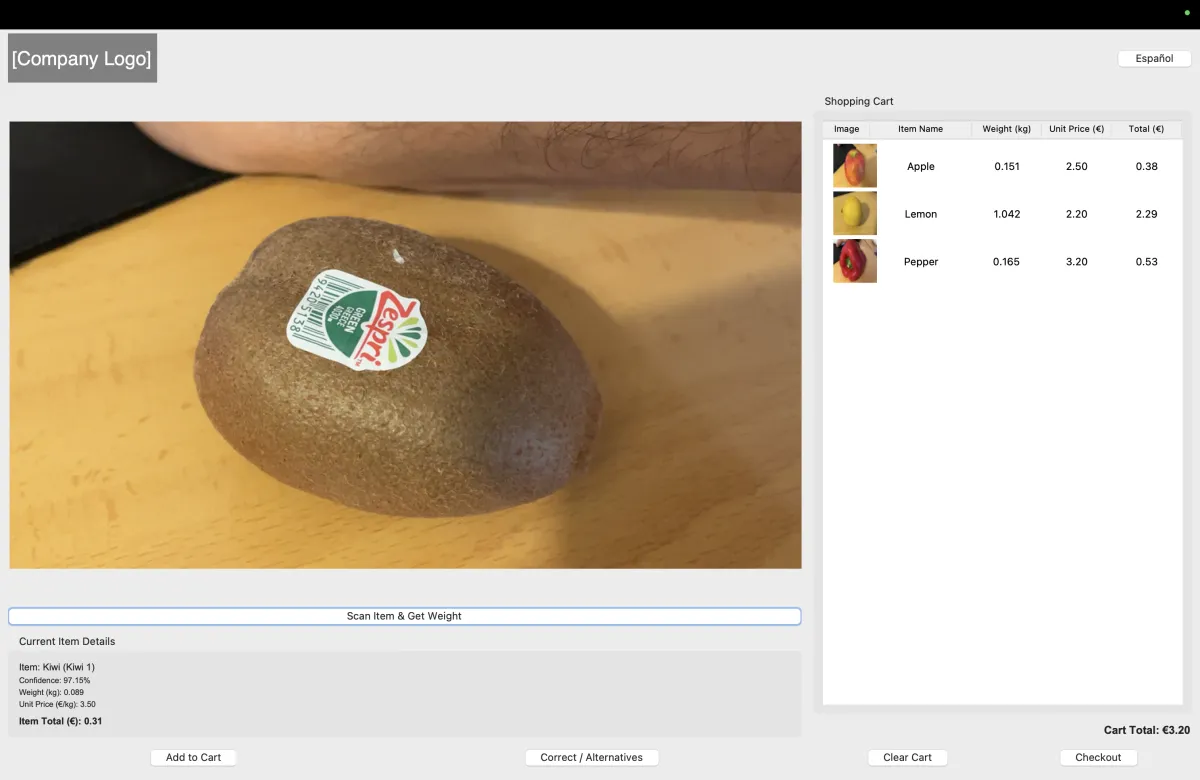
Automatic Fruit and Vegetable Detection System
MobileNetV2 produce classifier — runs live in your browser, webcam included
Universitat Politècnica de Catalunya in Barcelona, Spain · Feb 2025 - Jun 2025
This project implements a real-time fruit classification system using a deep learning model (MobileNetV2) and a webcam. Its key feature is an interactive feedback loop that allows users to correct misclassifications. This feedback is collected to augment the dataset, enabling the model to be retrained and continuously improved. The system also features background augmentation to enhance generalization from the Fruits-360 dataset to real-world scenarios.
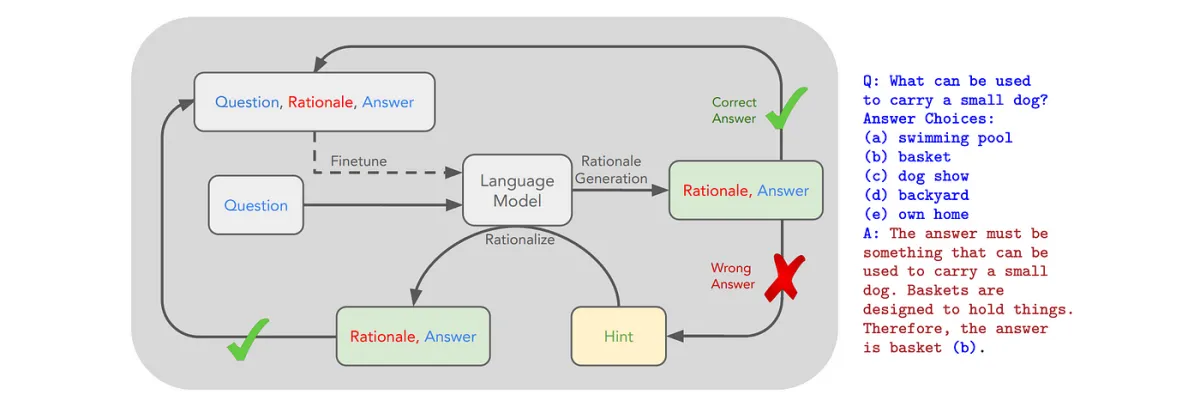
Study Project: Robustness and Reasoning in Small Language Models
Shows a fine-tuned 1B model out-reasoning a stock 3B on GSM8K — full write-up on the blog
Humboldt University of Berlin, Germany · Nov 2024 - Jun 2025
This study project investigates the effectiveness of reasoning-enhancement techniques (e.g., advanced prompting, multi-stage finetuning, and the hybrid STaR method) on a 1-billion parameter language model, comparing its performance against a larger 3B model. The research demonstrates that with the right approach—specifically by finetuning on a mixed dataset and applying Plan-and-Solve prompting—a 1B model can significantly outperform its larger counterpart on complex reasoning tasks like GSM8K. The project concludes that the success of these techniques is highly dependent on the model's pre-training and the specific task, highlighting a path to creating smaller, yet highly capable language models.
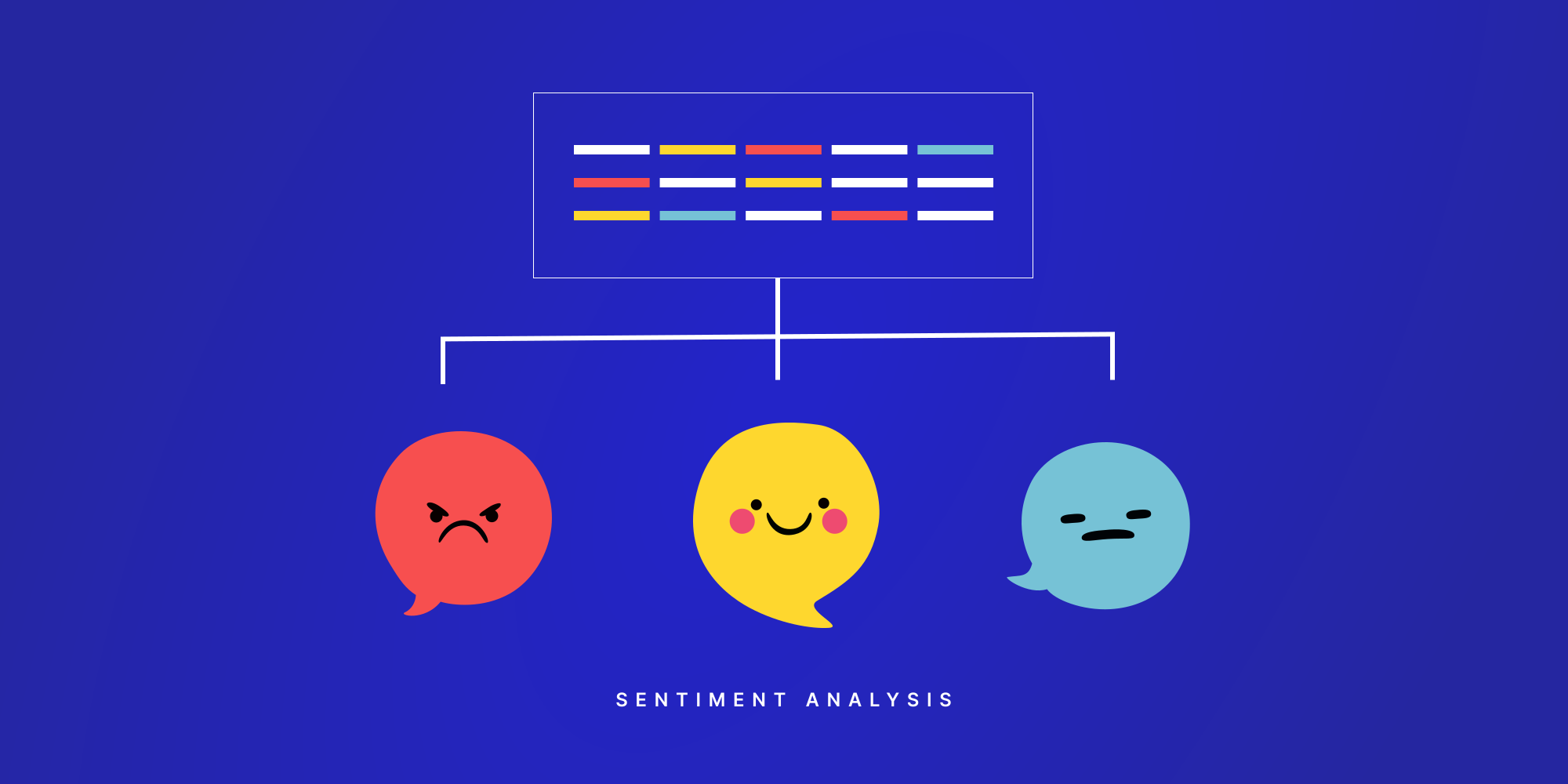
Movie Sentiment Analysis
Word2Vec + FastText review classifier — type a review, watch it score live
Aug 2024
This project implements a sentiment analysis pipeline for movie reviews using Word2Vec embeddings, a Noise Robust Learning technique, and a FastText-based neural network classifier. The goal is to classify movie reviews based on their text content as either positive or negative.
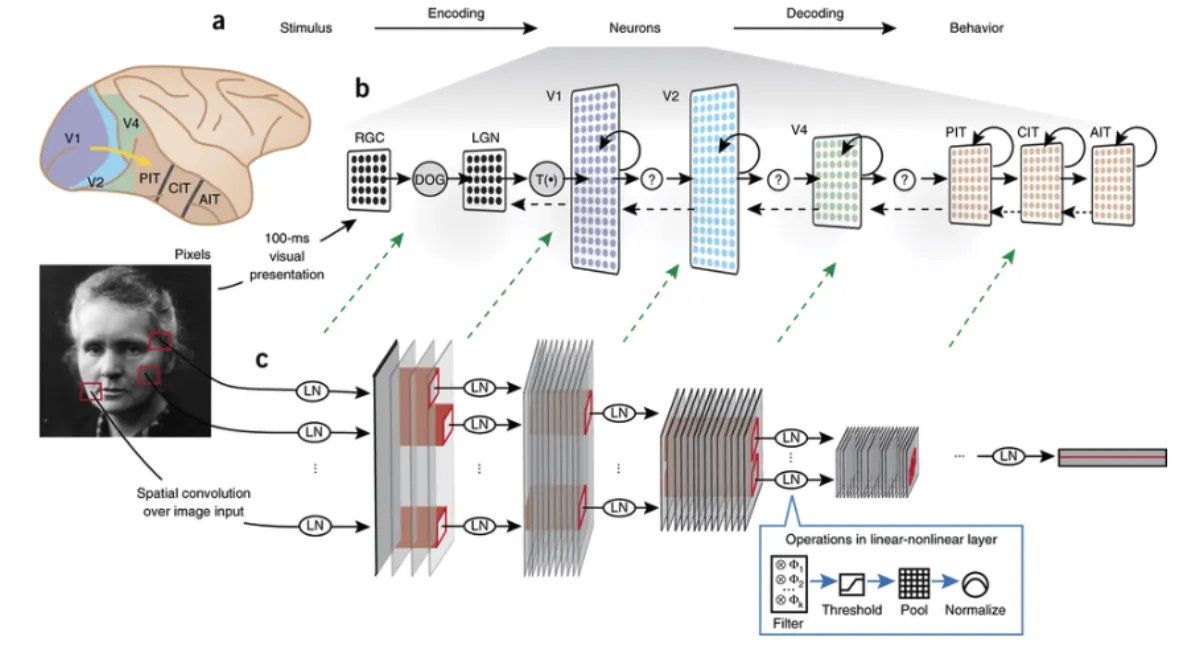
Cognitive Robotics CNN Competition (Kaggle)
2nd place on the Kaggle leaderboard — 0.937 public accuracy
Humboldt University of Berlin, Germany · Spring 2024
Achieved second place in a Kaggle competition focused on image classification. The project involved designing, training, and fine-tuning a Convolutional Neural Network (CNN) to achieve a high accuracy score (Public: 0.937, Private: 0.928).
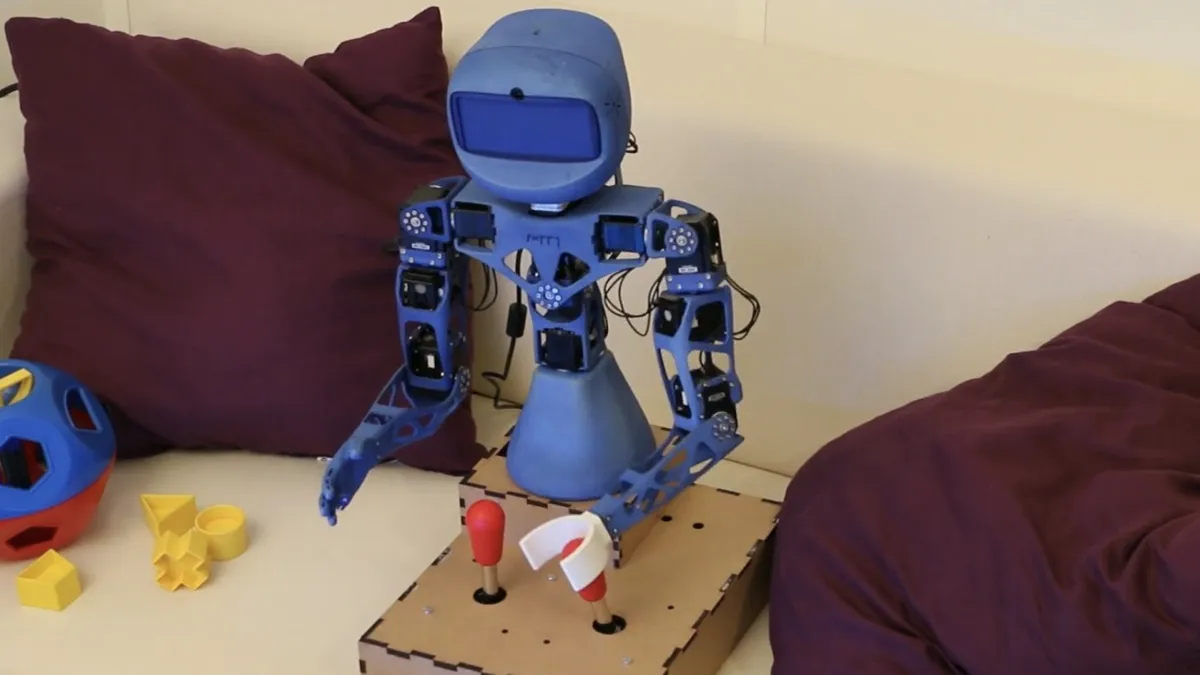
Hierarchical Learning for Tool Use in Robotics
2D robotic-arm simulation for intrinsically motivated tool use
Humboldt University of Berlin, Germany · Fall 2023
This project simulates a 2D environment where robotic arm tools interact with various objects. The simulation includes elements like grip arms, sticks, and magnets, designed to explore intrinsic motivated learning and tool use in a controlled setting for a Machine Learning in Robotics seminar.
Self-built and Programmed Vacuum Cleaner Robot
Self-built autonomous vacuum robot — I owned the navigation software; watch it drive
HTW Berlin, Germany · Apr 2022 - Aug 2022
In a team of four, we divided the tasks of construction, programming, and testing to create a customizable, self-sufficient vacuum cleaner. I was primarily responsible for the software development, ensuring the vacuum cleaner's efficient navigation and obstacle avoidance.
Voice control system for a model factory
Voice-controlled model factory with PI-Informatik — featured on the company blog
HTW Berlin, Germany · Oct 2021 - Feb 2022
Our team developed a speech control system for controlling a model factory as part of a collaborative project with PI-Informatik. I was instrumental in the development of designing the GUI, implementing the speech recognition, and the integration with the Raspberry Pi.
Windows Forms application for leftover food recycling
My first software project — a leftover-recipe generator (demo video inside)
HTW Berlin, Germany · Apr 2021 - Aug 2021
My first software project: Collaborated with two fellow students to create a recipe generator that transforms leftovers into new meals. The repository link is unavailable as I've lost my old university credentials.
Didn't find what you were looking for?The Agent searches my second brain — just ask.
Everything I've built, studied, and lived sits in one knowledge graph — my second brain. An AI agent reads it live and answers questions about me in seconds.
Contact
Open to work — tell me what you're building.